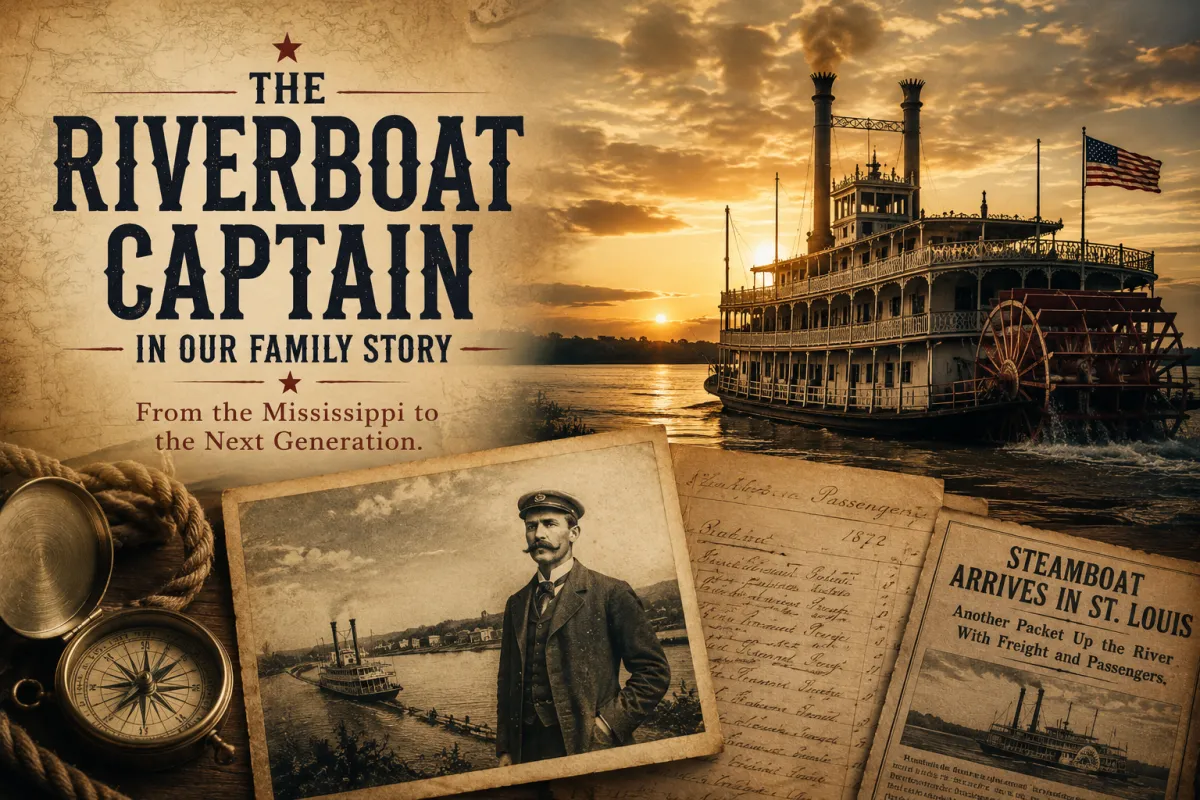
THE RIVERBOAT CAPTAIN HIDING IN MY FAMILY TREE
American Heritage Stories, Riverboats, Family History
The Riverboat Captain
Before highways crossed the country and airplanes made distance feel small, America moved by water. Long before exit signs and airport terminals, the surest way to move people, crops, letters, and dreams across the interior of the young nation was to follow the current. The Ohio and Mississippi rivers were not just blue lines on a map; they were working roads of water, wide and restless, their banks lined with farms, towns, and the quiet hope that something better might be waiting downstream.
A Country Measured in River Miles
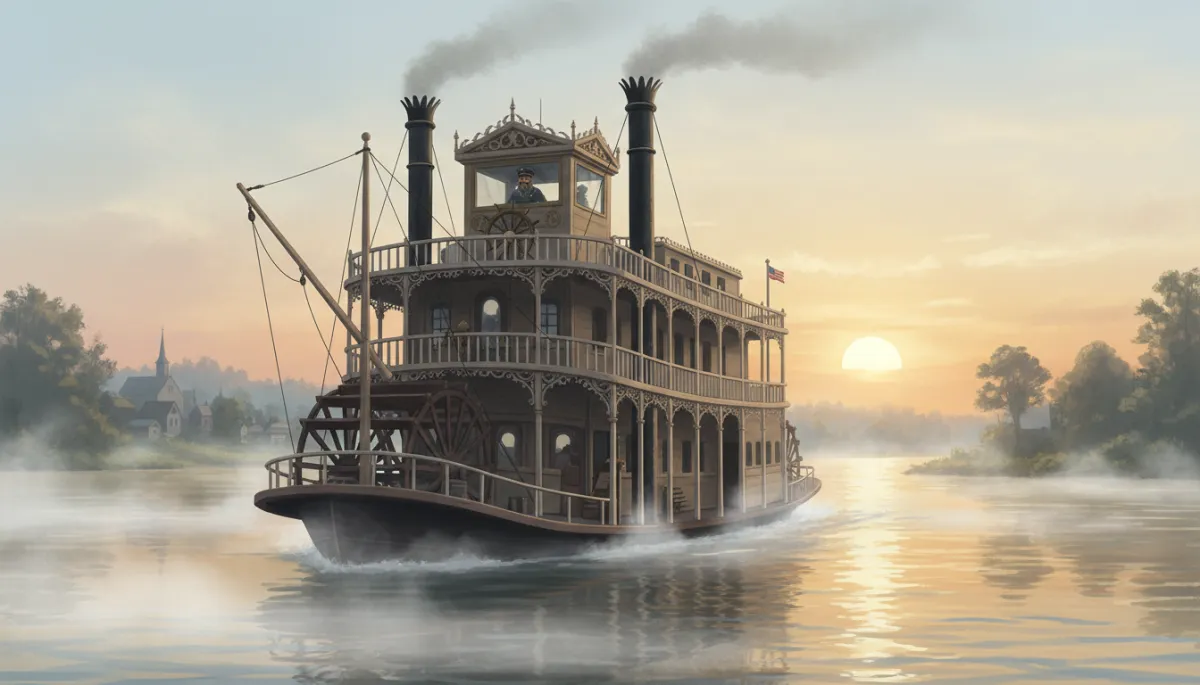
It is hard, in an age of interstates and jet engines, to imagine how large America once felt. Roads were rough ribbons of dirt and corduroy, turning to mud in spring and rutted dust in summer. Railroads were still pushing outward, their iron lines not yet stitched across every region. For countless families in the Ohio River Valley and the broad Mississippi basin, the most dependable route to the wider world was the water that flowed past their own backyards.
The Ohio River gathered the waters of Pennsylvania, West Virginia, Ohio, Kentucky, and Indiana, threading together coal towns, farmsteads, and river cities. From there, the Mississippi carried everything south, past river landings and cotton ports, to the Gulf and beyond. These rivers were the original interstates of the interior, linking small places to big ones, and small lives to larger currents of commerce and change. Barges and packets brought manufactured goods upriver and hauled grain, timber, livestock, and produce down, while passenger boats ferried soldiers, immigrants, traders, and families in search of work or a fresh start.
The Man at the Wheel
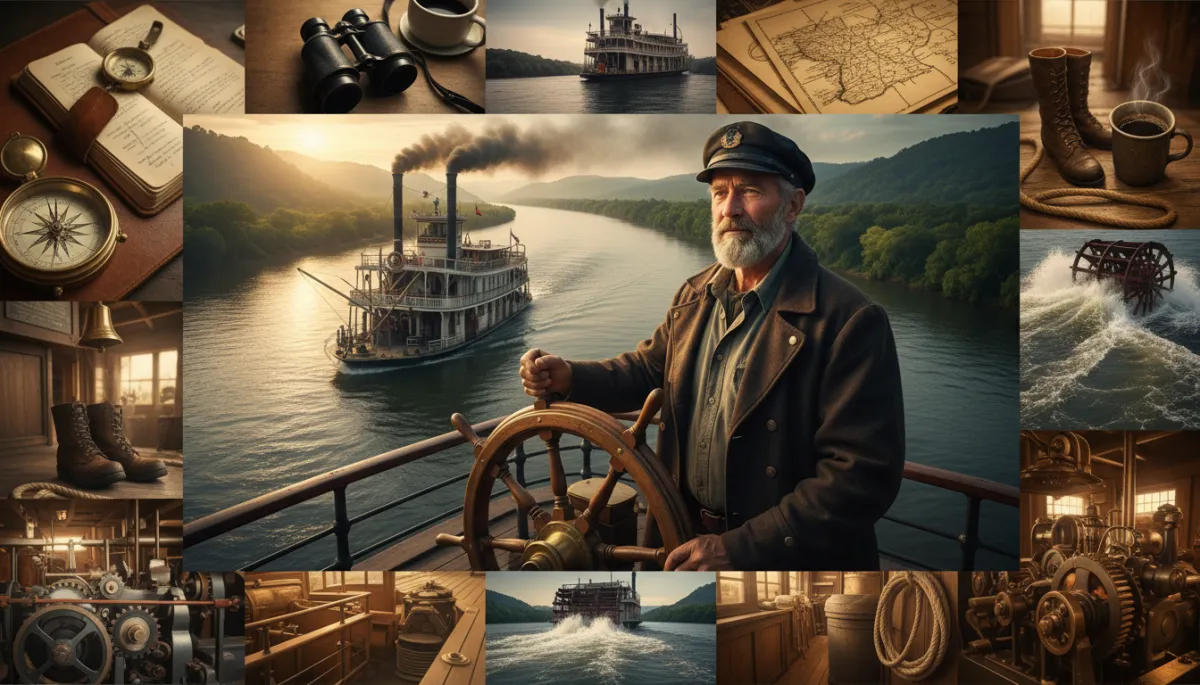
Among the papers in one family’s archive, tucked beside old photographs and folded letters, is the story of an ancestor who served as a riverboat captain on these waters. The handwriting is careful but plain, the details more about seasons and work than about dates and headlines. We do not have every fact. We cannot point to a specific boat or a precise route and say, “This one, on this day.” But we know enough to place this life within the larger world of river commerce, and to understand something of the responsibility carried by anyone trusted to guide a vessel down those shifting channels.
A riverboat captain on the Ohio and Mississippi systems was expected to be more than a pilot. Captains were navigators, managers, and mediators. They read the river with an almost instinctive attention: the color of the water, the pull of the current, the way driftwood moved along a bend. They were responsible for the safety of cargo and crew, for keeping to schedules that merchants and farmers depended on, and for maintaining order aboard a vessel that might carry everything from livestock to letters from home. Even when we speak in general terms about this profession, we glimpse the demands that shaped our ancestor’s working days and nights.
Hazards in a Living Highway
Rivers are not static. They rise and fall with the seasons, carve new channels, and hide old snags. In the historic riverboat era, captains contended with sandbars that shifted after every flood, submerged logs waiting to tear open a hull, and fog that could erase the shoreline in an instant. Spring brought high water and fast currents; late summer might mean low stages that left boats feeling their way over shoals. Winter ice could close sections of the river altogether, stranding boats and the people who depended on them.
Cargo added its own challenges. Boats carried barrels of flour and whiskey, bales of cotton, crates of tools, sacks of grain, and everyday necessities bound for small-town general stores. Passengers might include farmers headed to market, families moving west, traveling tradesmen, or soldiers on assignment. Keeping such a mix safe and reasonably comfortable required discipline and judgment. Crew members needed direction, tempers sometimes needed cooling, and all of it happened inside the confines of a wooden or steel hull riding on a river that cared nothing for human timetables.
Historical accounts of river work describe captains balancing timeliness with caution. A delayed departure could mean missed connections and disappointed shippers. Pushing too hard in poor conditions could mean damage, loss, or worse. When we read that a family ancestor “ran the river” or “worked the boats,” we can hear, between the lines, the unspoken decisions: whether to risk a night passage in falling water, whether to tie up and wait for fog to lift, how to handle a sudden storm or a stubborn sandbar. Even without a detailed logbook, the broader history of the trade helps us understand the weight of such choices.
From Farm Gate to Far Market
For the communities along the Ohio and Mississippi, river commerce was more than background scenery. It was the difference between a crop that could only be sold locally and one that could reach distant buyers. A farmer living a few miles from the river might haul wagonloads of corn, hogs, or tobacco to a landing, trusting that the riverboats would carry those goods to larger markets. Town merchants ordered tools, cloth, and manufactured goods from cities they might never see in person, confident that the river would deliver what the catalogs promised.
Mail traveled the same way. Letters crossed states sealed inside canvas bags stacked among freight. News of births, deaths, opportunities, and homecomings moved at the pace of the current and the skill of the crews. Migration followed these routes as well. Families boarded boats with trunks and hopes, stepping off days or weeks later in a new town where the accent sounded familiar but the future was unwritten. The work of riverboat captains, mates, engineers, and deckhands created a moving bridge between isolated places and the growing heart of the country.
One Family, Many Currents of History
The family story of a riverboat captain, preserved in a handful of handwritten pages and aging clippings, is modest in its details. It does not claim great wealth or famous voyages. Yet, when we set that story against the broader backdrop of river history, its significance deepens. This single life becomes a vantage point on a larger era when the rivers were lifelines, and ordinary work on the water helped knit together a sprawling nation.
Looking closely at one ancestor’s connection to the river invites us to ask questions that reach beyond a single family. What did it mean to raise children in a river town, hearing whistles in the night? How did it feel to watch the first railroads and, later, paved roads begin to compete with the river trade? How did the rhythms of departure and return shape marriages, friendships, and local economies? Even without exact dates and ship manifests, the broader historical record lets us place this family within a living, moving landscape of work and change.
Why the Paper Trail Matters
None of this would be possible without the quiet persistence of family record-keeping. The archive that preserves this riverboat story is not a grand institution. It is a collection gathered over generations: folded letters in careful script, military papers, photographs with names penciled on the back, newspaper clippings that someone thought worth saving. Together, they form a bridge between memory and history, between what a family remembers and what a nation once was.
Preserving these materials matters because they ground large historical forces in real lives. The rise and fall of river commerce, the shift from steamboats to railroads to interstate trucking, the growth of Midwestern towns and Southern ports — all of it becomes more human when we can say, “Someone in our family was there. This was their work. This was their view of the river at dawn.” Family records do not give us every answer, but they offer enough to connect the dots between the intimate and the immense.
Carrying the Story Forward
American Heritage Brand Company exists in that space where memory meets craftsmanship. Through American Heritage Stories, the company is working to research, connect, and share narratives like that of the riverboat captain — stories that begin in family trunks and attics and then open onto the broader landscape of American history. By listening carefully to what the records can tell us, and by respecting the limits of what they cannot, this work turns private recollections into shared heritage.
The process is ongoing. Each document invites another question; each story hints at others still waiting to be found. American Heritage Brand Company is committed to tracing these threads, situating family experiences within the larger sweep of river travel, migration, labor, and community-building. In doing so, the company honors not only the finished products that bear its name, but also the generations of hands and hearts that helped build the country those products celebrate.
The rivers carried more than cargo. They carried families, ambitions, opportunity, and stories that survived long after the boats disappeared from the horizon. Today, as we drive over bridges and fly above waters that once defined the pace of American life, it is worth pausing to listen for those stories again — in the rustle of old paper, in the curve of a faded photograph, and in the steady, enduring pull of the current that shaped a nation from shore to shore.