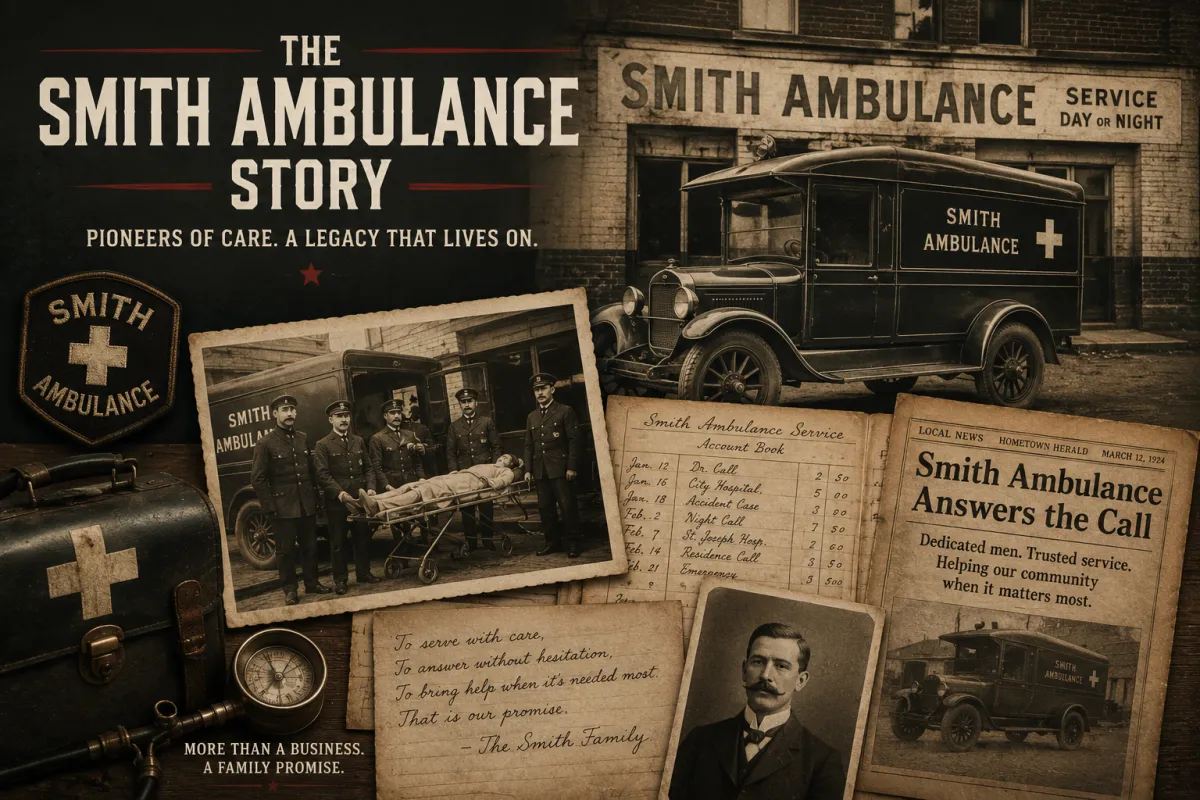
MY GRANDFATHER HELPED CHANGE EMERGENCY MEDICINE
American History, Emergency Medicine, Family Business
Smith Ambulance and a New Era of Emergency Medicine
In the middle decades of the twentieth century, before modern 911 dispatch centers and paramedic units became fixtures of American life, companies like Smith Ambulance were already threading through city streets, carrying people at their most vulnerable moments toward the promise of help.
Picture a cold Minneapolis evening in that era. Downtown lights glow against a winter sky, streetcars rattle along their tracks, and storefronts cast rectangles of yellow onto the snow. A call comes in. Somewhere in the city, a telephone rings on a desk, and a small crew moves with practiced urgency. An ambulance engine turns over, headlights cut through the dark, and a boxy vehicle pulls away from the curb, siren splitting the night as it heads toward a stranger in trouble. There is no computerized dispatch, no GPS, and little of the advanced medical equipment we now take for granted. But there is speed, intention, and a growing sense that what happens on the way to the hospital matters.
Before Modern EMS
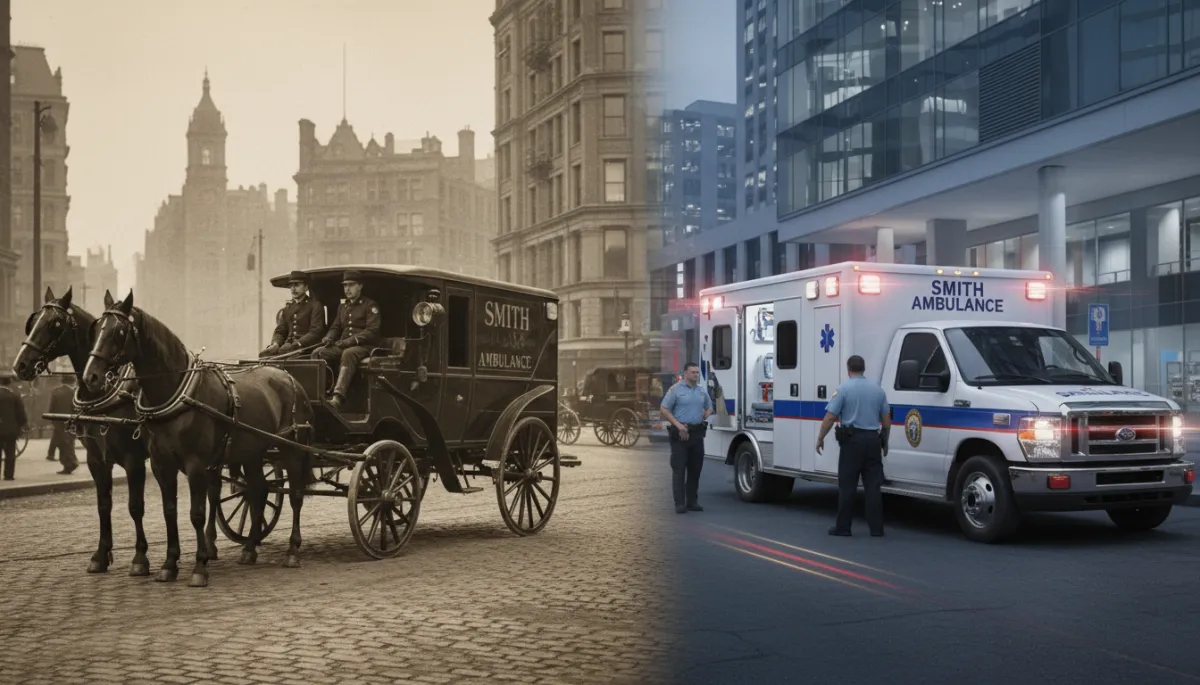
In the early and mid-twentieth century, ambulance service in much of the United States was a patchwork. Hospitals, funeral homes, police departments, fire stations, and private companies all played some part in transporting the sick and injured. The idea of a unified emergency medical system, with standardized training and protocols, was still decades away. What most communities had instead were vehicles and drivers willing to respond when someone called for help.
Private ambulance companies were a crucial part of this landscape. They stepped into a gap between the need for rapid transportation and the limited capacity of public institutions. In cities like Minneapolis, these firms became familiar presences on the streets, their names painted on doors and remembered on bills, business cards, and family stories. Smith Ambulance, operating in the Minneapolis area, was one of those companies, woven quietly into the daily life of the region and into the family history connected to Harry Robert Smith.
A Family Business in Minneapolis
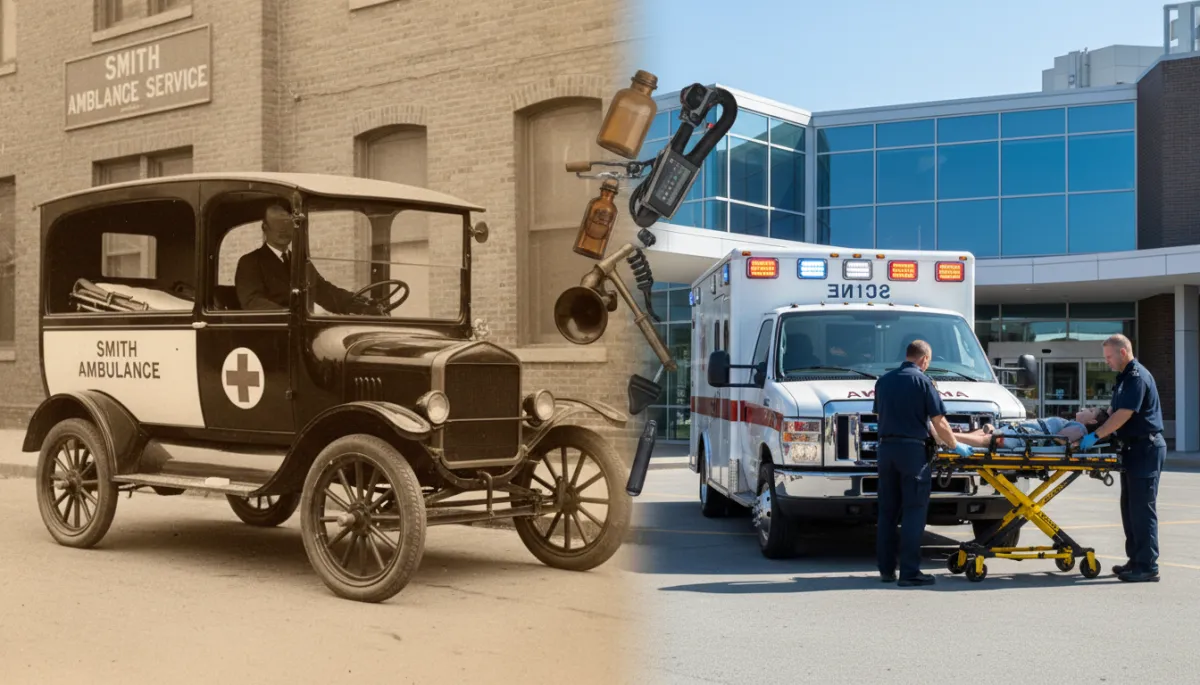
Today, the full history of Smith Ambulance is still being researched. The company’s exact dates, routes, and contracts are not yet fully documented. But within the family, the name carries weight. It is remembered as a meaningful part of Minneapolis-area ambulance service during the mid-twentieth century, a time when the city was growing, traffic was thickening, and the distance between home and hospital seemed to shrink and yet become more consequential than ever before.
Like many small firms of its kind, Smith Ambulance was not a household name across the nation. It did not design the national emergency number, and it did not single-handedly create modern emergency medical services. Instead, its significance lies in something quieter and more local: the way a family business became part of the everyday machinery of public safety, answering calls in the Minneapolis area when people needed to be moved quickly and carefully from crisis to care.
When Ambulance Service Began to Change
The mid-twentieth century was a turning point in American emergency medicine. For decades, ambulances had been understood primarily as vehicles. Their job was to get a patient from one place to another as quickly as possible. The medical work happened at the hospital. What happened on the road, in the back of the ambulance, was often limited to basic first aid or simple measures to keep someone alive until they reached a doctor’s hands.
Gradually, that understanding began to shift. Advances in medical science highlighted how crucial the first minutes after an injury or sudden illness could be. National conversations about trauma, heart attacks, and highway crashes underscored the cost of delays and the limits of simple transport. Across the country, communities started to look more closely at their ambulance services and to ask a new question: not just How fast can we get someone to the hospital? but What can we do for them before they arrive?
From Transportation to Emergency Response
In this changing environment, companies like Smith Ambulance operated at the edge of a new idea. The ambulance was no longer just a car or a van with a stretcher in the back. It was becoming a mobile extension of the emergency room, a place where care could begin rather than simply a space between one door and another. Even before fully developed paramedic programs and national standards took hold, the expectations placed on ambulance crews were rising. Faster response, better organization, and more deliberate care were increasingly part of the job.
The growing importance of trained personnel and specialized equipment was central to this evolution. Across the United States, training courses expanded beyond basic driving and lifting. New tools began to appear in ambulances: oxygen supplies, improved stretchers, devices to stabilize fractures, and other equipment that allowed crews to do more for patients in those crucial first minutes. While the specific tools and certifications connected to Smith Ambulance are not yet fully documented, the company worked during a period when expectations for ambulance crews were clearly rising, and when the public was beginning to see ambulance workers not only as drivers but as part of the chain of medical care.
A Family Story Inside a Bigger Transformation
Local ambulance companies played a vital role before today’s modern emergency medical systems fully developed. They answered calls at all hours, navigated familiar streets in all seasons, and formed a bridge between ordinary life and the hospital doors. In the Minneapolis area, Smith Ambulance was one such bridge. For the family connected to Harry Robert Smith, the company stands as a reminder that national systems are built from local efforts, one response at a time, one patient at a time, one family business at a time.
When we look back on that mid-century moment, it is tempting to focus only on the big milestones: the emergence of standardized training, the spread of new medical technologies, the formal creation of emergency medical services as a recognized field. Yet the transformation of emergency care also depended on everyday operators like Smith Ambulance, whose work helped communities adapt to changing expectations long before the systems were fully named and mapped. A family business could not control the national direction of emergency medicine, but it could participate in it, simply by being there when the phone rang and the siren needed to sound.
Why This History Matters
Stories like that of Smith Ambulance remind us that public safety and medicine are not only the work of institutions and agencies; they are also the work of families, small companies, and local commitments. The family memories tied to this Minneapolis-area ambulance service preserve more than just a business name. They preserve a sense of what it felt like to live through a period when the country was rethinking how quickly and how effectively it could respond when someone was in distress.
Local business history has a way of grounding national stories. We can read about the rise of emergency medicine in reports and textbooks, but it is in the recollection of specific companies, specific neighborhoods, and specific families that the story becomes tangible. Knowing that a family like the one connected to Harry Robert Smith operated Smith Ambulance in the Minneapolis area during this pivotal era gives us a human-scale entry point into a much larger transformation. It reminds us that the grand arc of change is built from countless smaller arcs, each with its own names and faces.
Preserving stories like this helps explain where modern systems came from. Today, when an emergency call is placed, a complex network of dispatchers, responders, protocols, and technologies moves into action. That network did not appear overnight. It emerged from decades in which communities relied on a mix of public and private providers, gradually demanding more speed, more skill, and more coordination. Smith Ambulance belongs to that formative period, when the work of getting someone to the hospital began to blend with the work of caring for them along the way.
As research into the full history of Smith Ambulance continues, what is already clear is that its story is part of a broader American narrative. It reflects a time when the nation’s understanding of emergency care was shifting, and when local businesses were quietly adapting to that shift. In remembering a single Minneapolis-area ambulance company, we catch sight of the larger movement that carried emergency medicine from the hospital doors out into the streets, the homes, and the everyday lives of ordinary people.
The story of Smith Ambulance belongs to a larger American transformation, when emergency care began moving out of the hospital and closer to the moment when help was first needed.